Monday, 9 January 2017

Green Hairstreak

Green Hairstreaks are our only green butterfly and can be found throughout the U.K. They fly from late April-June and possibly early July. Like other Hairstreaks in Britain they have only one brood a year. The white hairstreaks [dots] on each of the hind wings [and how they get their name] can vary greatly from one butterfly to another. The male and female are similar having brown upper wings and green undersides. They always land, feed etc. with closed wings. The males can quite often be found alleviated on a perch over looking his domain, warding off any other intruding males.

A male Green Hairstreak over looking his territory

A female on Greater Stitchwort
 n early spring Bluebells are a favourite source of nectar, and when these flowers wither and die they can be found on anther favourite, Wood Spurge, other flowers are also visited including another woodland species, Greater Stitchwort.

A Green Hairstreak on Bluebell
Green Hairstreak  feeding on Wood Spurge
  The females lay their eggs [ovum] on a number of plants including Gorse, Broom, Dyers Greenweed and Bird's-foot Trefoil, Common Buckthorn etc. The eggs hatch between 10-14 days. The larval stage lasts about 3.5 weeks and, they overwinter as a pupa, the only member of the Hairstreak family to do this in the U.K.

Female  looking to lay an egg on Dyers Greenweed

Female about to lay an egg on Broom

Green Hairstreak egg on Broom

A newly emerged 1st instar Green Hairstreak larva

All photographs are the copyright of Nick Broomer

Friday, 6 January 2017

Painted Lady

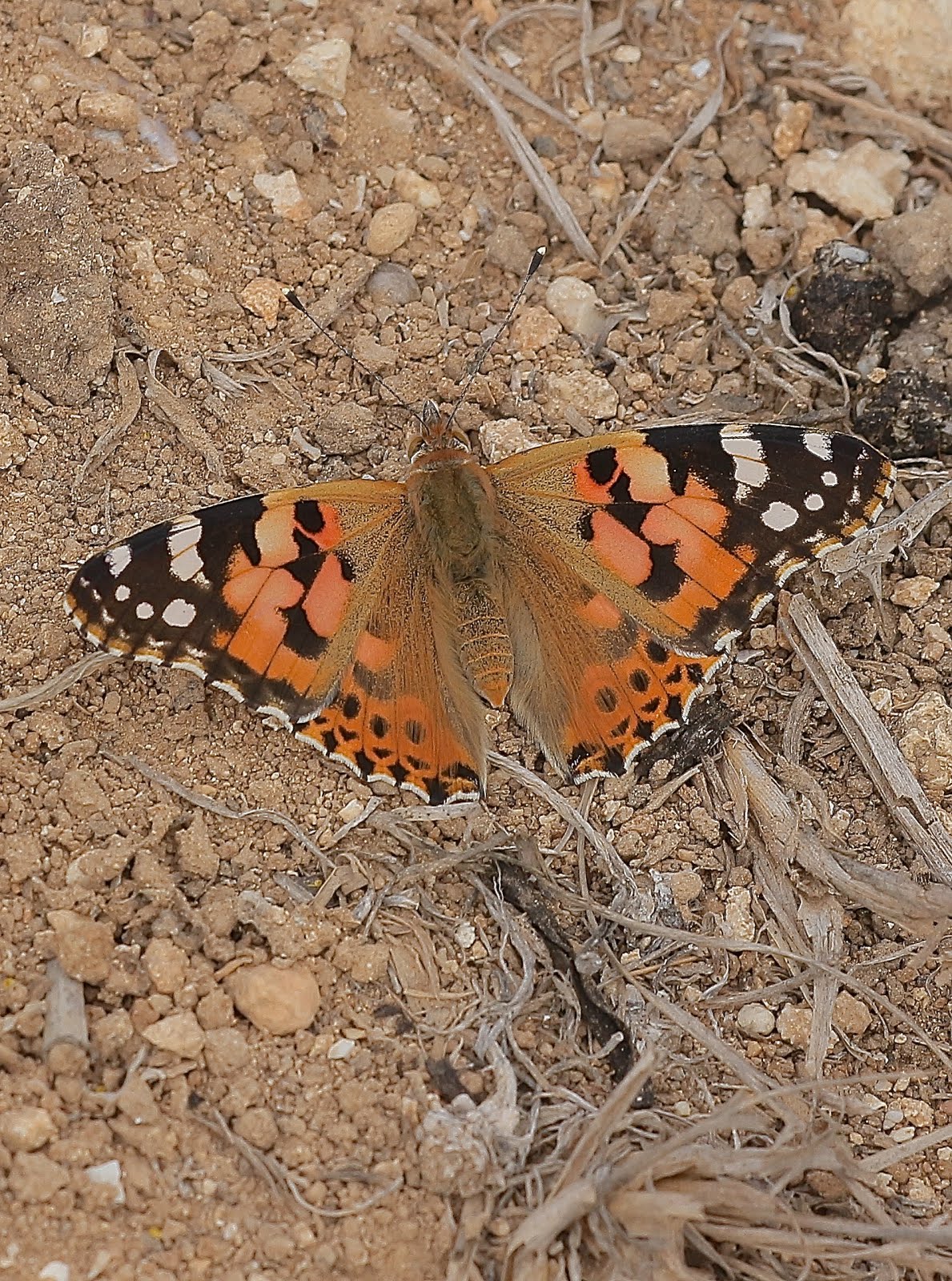
The Painted lady is an overseas visitor from North Africa and Southern Europe and, is commonly found throughout Europe. The first butterflies normally arrive in Britain late April, early May, in very small numbers, spreading across all four corners of the British Isles.  In good years, [like 2009] they can arrive on our shores in their thousands, but this is a rare occurrence.

Both sexes are alike. But, can vary in size, which is quite common.

Once the females have been mated, they lay their eggs on various Thistles, and sometimes Common Nettle and Mallow Flowers are used. The tiny larva hatch after about a week.

The larva live secretively, in tents made of leaves, similar to that of the Red Admiral larva. There are 4 moults in total, [5 instars].

In Britain they are commonly found nectaring on purple flowers, such as Thistles and Knapweed etc. In Europe they can be found feeding on one of their favourite flowers, Sticky Fleabane.They also spend a lot of time on the ground, wings spread open soaking up the sun.

Painted Lady on Sticky Fleabane, Malta
Female Painted Lady, Turkey
Male Painted Lady feeding on Hardheads, U.K.
Painted Lady commonly found on the ground soaking up the sun

All photographs are the copyright of Nick Broomer

Sunday, 1 January 2017

Comma

The Comma is one of Britain's six hibernating butterflies, along with the Brimstone, Red Admiral, Small Tortoiseshell, Peacock and if it still exists on the Isle of Wight the Large Tortoiseshell.

It is found commonly throughout England and Wales, in gardens, disused railway lines, field margins and sunny woodland rides. It can be seen as early as February but, normally appears in March where they can be seen basking in the sun, with males busily chasing of any intruders that wonder into his territory. There are two new broods a year, with the 2nd brood overwintering.

They can commonly be found basking in the late afternoon sun in the Spring
when its quite easy to obtain photographs, photo taken 8th March, 4.23pm
   The first brood normally appear late June early July.

The light coloured aberration form of the Comma, Hutchinsoni are quite often found at this time of year
This one being a female, photo taken 26th June

Another Comma aberration Neon, which is not often seen, photo taken 29th June
 Whilst the second brood fly in late September early October.

A 2nd brood male Comma, photo taken 28th September in my garden

They hibernate and roost in thick undergrowth/vegetation.

A roosting Comma, the only one i have found, photo taken 27th March
 They lay their ovum [eggs] on the tops and edges of Common Nettles leaves and, are quite easily found. They hatch after about two weeks depending on the weather, [hot, cold etc].

Comma's ovum on the edge of a Common Nettle leaf,
photo taken 26th March
 The tiny larva emerge covered in tiny hairs, which help them to attach themselves to the back of a small fresh succulent leaf where they live, feeding and resting until are a lot larger when they feed more often out in the open.The larval stage lasts between 3.5  and 5 weeks [depending on the weather] with a further 2 weeks as a pupa.

 To see the life cycle of the Comma see 25.4.2016 on this Blog, thank you.

All photographs are the copyright of Nick Broomer.

Orange-tip


The female Orange-tips commonly lay their ovum [eggs] on Wild Garlic Mustard and Cuckoo Flower. The eggs when first laid are pure white, turning orange after about four days and, hatches after a week.                                                

Female Orange-tip ovipositing on Cuckoo Flower
Female Orange-tip ovipositing on Wild Garlic Mustard
A freshly laid Orange-tip egg on the bottom of a Wild Garlic Mustard leaf
Orange-tip egg on a Cuckoo Flower stem, having turned orange 
Orange-tip egg 24 hours before hatching

On emerging from the egg the tiny larva have their first meal by eating the empty ovum. The larva moults 4 times, [5 instars]  and eats the old discarded skin.  On reaching the final stage, the 5th instar,  larva attaches itself to a plant stem, by means of a Cremaster, which it attaches the tip/bottom of it's abdomen to, with a series of small hooks, then it attaches a Girdle around the middle of it's body and the plant stem ready for pupation.

Orange-tip 1st instar larva having just emerged from it's egg

The tiny larva taking it's first meal, eating it's empty ovum casing
Late 1st instar larva ready for it's first moult

2nd instar larva directly after it's first moult
Late 2nd instar larva
3rd instar larva having just gone through it's 2nd moult
3rd instar larva just finishing eating it's discarded skin
Late 4th instar larva eating the leaf of Garlic Mustard
5th instar Orange-tip larva ready for pupation
     When pupating, it makes several changes before it is ready to overwinter at this stage. Resuming it's final changes to the pupa and the butterfly within, in early Spring the following year.
A few hours after the start of the 5th instar larva pupating
Eleven minutes later it looks like this
The Orange-tip pupa overwinters at this stage
A closer look of the above pupa
     In April the following year the pupa makes it's final changes.

A male Orange-tip pupa 24 hours before it emerges
A female Orange-tip pupa 24 hours before emerging
Male Orange-tip having just emerged from the pupa
Female Orange-tip having just emerged
Male Orange-tip
Male Orange-tip with closed wings
A very fresh female Orange-tip
Female Orange-tip with closed wings


Wednesday, 2 November 2016

Humming-bird Hawkmoth

The Humming-bird Hawkmoth is a migrant to Britain, mainly the southern counties. They visit a large variety of garden flora including Honeysuckle, Lavender and Red Valerian etc.

This particular Humming-bird Hawkmoth was photographed in Malta

Saturday, 22 October 2016

Common Wasp

The Common Wasp [Vespula Vulgaris] is a late flying insect in Britain and flies between July and  November. These particular Wasps can be found around most of the world in counties such as China, Australia, New Zealand, India and Europe.

A female Common Wasp hunting for food/insects for her siblings back at the nest
in late July

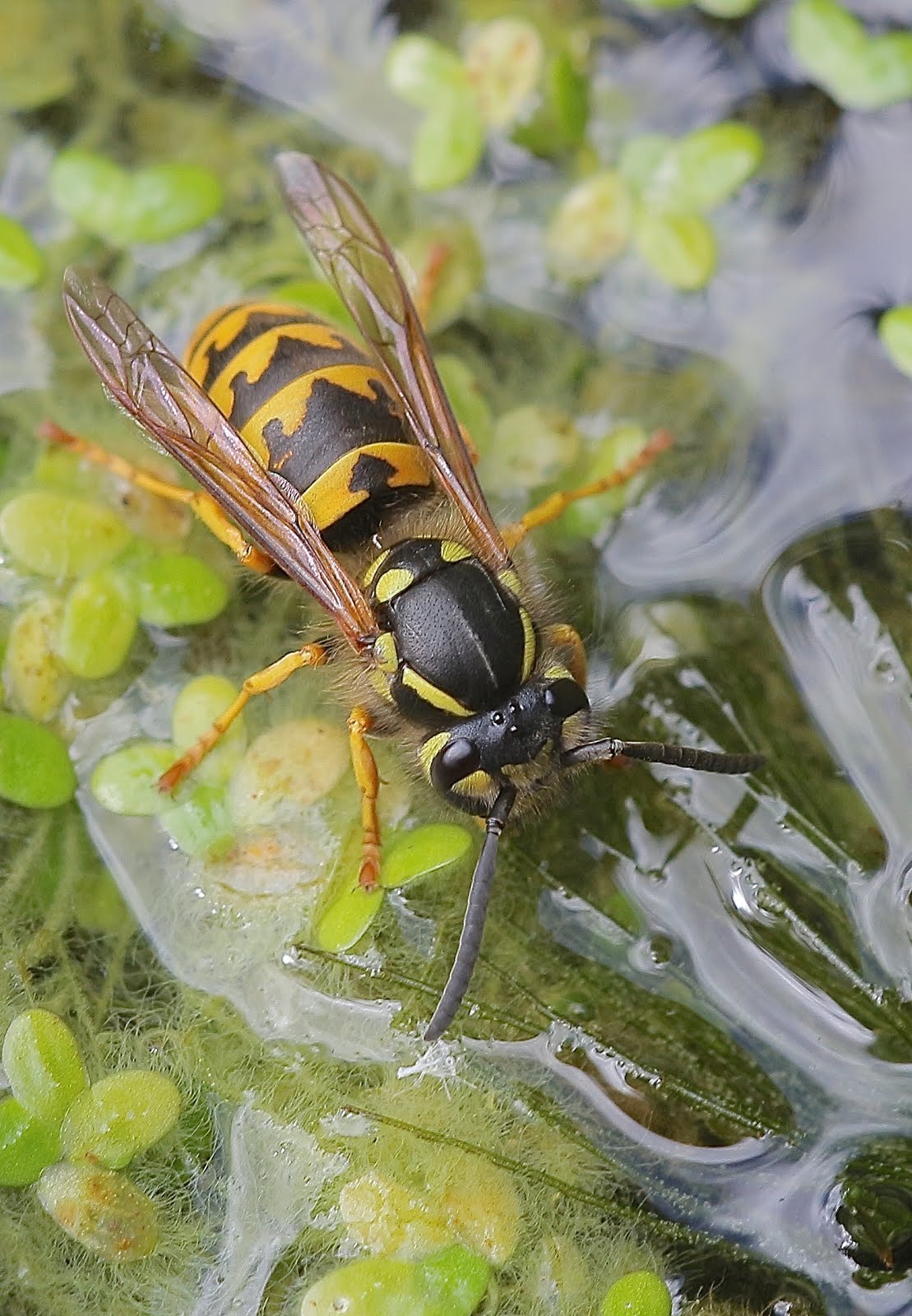
A Common Wasp taking a drink from my Garden pond

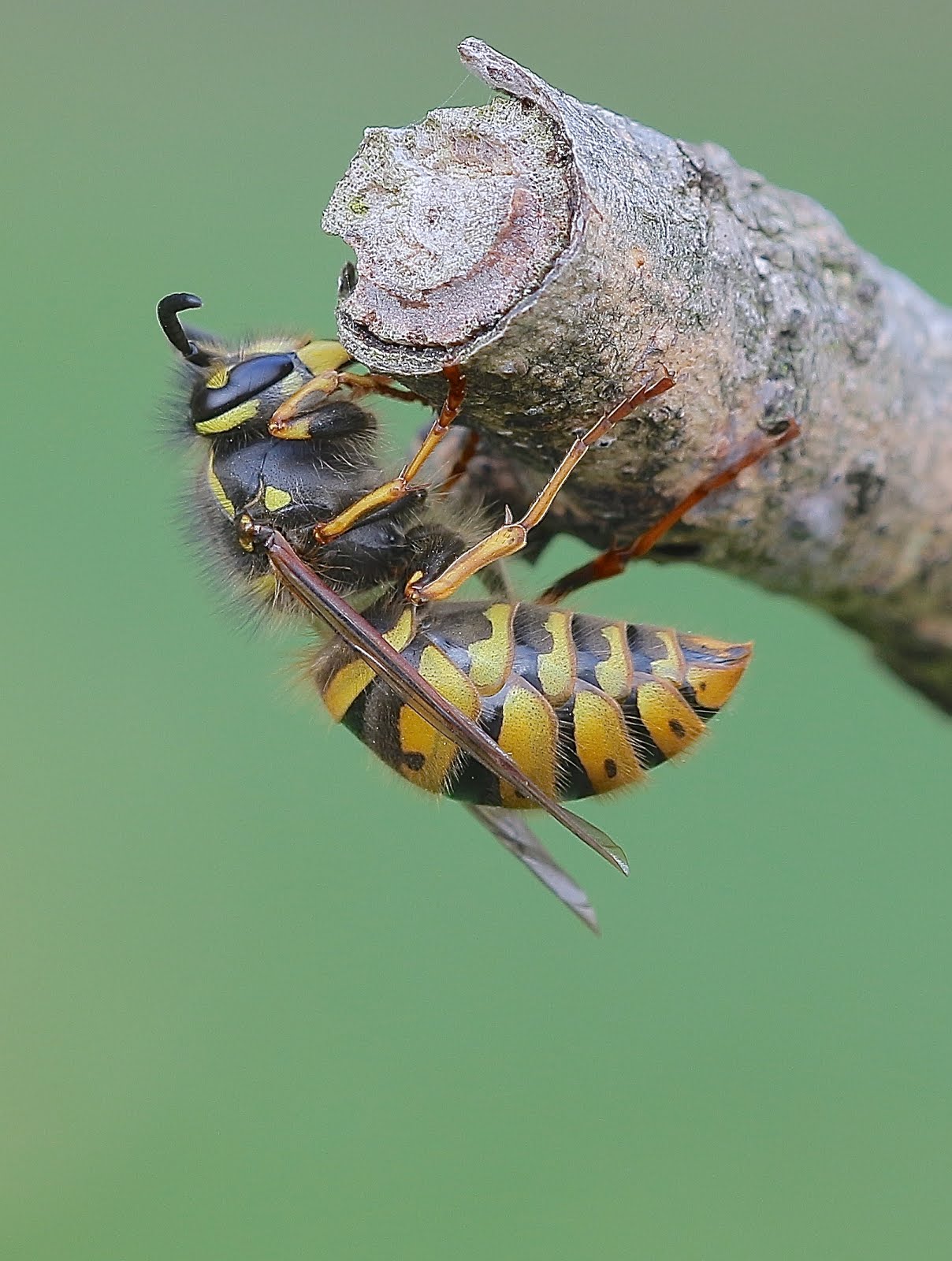
A fresh Queen Common Wasp in my garden, late October. This Queen will find somewhere to
hibernate for the winter before starting her own colony in the spring.

Saturday, 1 October 2016

Small Heath

The Small Heath is commonly found throughout the U.K. in any grassland habitat, fields, roadside verges, woodland clearings etc. And normally spend a large part of their time well down in amongst the vegetation.

A male Small Heath where you would normally find this species

The male is smaller than the female and are quite similar in appearance but not the same.

A male Small Heath showing the undersides of it's wings and,
a rare glimpse of a small part of the upper wing.

The female's forewing undersides are a lighter orange in colour to that of the males which are slightly darker.

A female Small Heath 

Both sexes always land [roost, feeding etc.] with their wings closed. The upper side of the wings in both sexes are orange, again the females are slightly lighter than the males. There are two, sometimes three broods a year. They fly between late April and late June/early July and, between late July/late September and, if there is a third brood, October. They overwinter as a caterpillar in stages/instars.